
ERP for your industry

Why an ERP is best practice, sector by sector

An ERP brings finance, stock, purchasing, projects and reporting into one system so decisions are made on the same numbers. Choose your industry to see how that works in practice, what it changes day to day and what to look for when comparing platforms.

New to ERP? Read what an ERP system is and how to choose an ERP system.

Example use cases

How organisations put ERP to work

Anonymised, illustrative scenarios from different sectors. Open any industry guide for more examples.

Construction

A mid-sized civil engineering contractor

The challenge
Accurately tracking costs and revenue across multiple concurrent projects was complex, making it difficult to assess real-time contract profitability.
The approach
An integrated ERP system was implemented to provide detailed contract costing, budget comparison, and real-time revenue recognition.
The outcome
The contractor gained a clear understanding of project financial performance, improved cost control, and could confidently manage variations.
ERP for construction

Food and beverage

An artisan bakery

The challenge
Tracking ingredients from supplier to finished product, especially for recall purposes, was manual and time-consuming.
The approach
They implemented an ERP system to record every ingredient batch used in each production run, linking it directly to the customer order.
The outcome
The bakery achieved full end-to-end traceability, enabling rapid identification of affected products and streamlining their quality control processes.
ERP for food and beverage

Charities

A regional housing charity

The challenge
Tracking spend across multiple restricted funds and producing compliant grant reports was challenging with their spreadsheet-based systems.
The approach
An integrated ERP system was implemented with multi-dimensional accounting to segregate funds and automate grant reporting.
The outcome
The charity achieved transparent fund accounting, accurate grant reporting, and streamlined compliance with funder requirements.
ERP for charities

Engineering

A custom machinery manufacturer

The challenge
Managing complex bills of materials (BOMs) for engineer-to-order projects, with frequent revisions, was prone to errors and delays.
The approach
An ERP system provided robust BOM management, integrating design changes directly with production planning and material procurement.
The outcome
Reduced manufacturing errors and improved project timelines through accurate and up-to-date material specifications.
ERP for engineering

Hospitality

A chain of independent restaurants

The challenge
They struggled with inconsistent stock levels, varying supplier pricing across locations, and lacked a consolidated view of each restaurant's financial performance.
The approach
An ERP was implemented to centralise procurement, manage inventory accurately at each site, and provide real-time profitability analysis for the entire group.
The outcome
The chain achieved better control over food costs, optimised stock holding, and gained clear insights into the financial health of every outlet.
ERP for hospitality

Consulting businesses

A growing management consultancy

The challenge
They struggled to get a unified view of consultant utilisation across multiple client projects and forecast future resource needs.
The approach
An integrated ERP provided real-time visibility into project allocations and consultant schedules, supporting strategic resourcing decisions.
The outcome
Improved resource planning led to more balanced workloads and better project delivery within agreed timelines.
ERP for consulting businesses

Illustrative, anonymised examples based on typical scenarios. Not client case studies.

ERP stats

Why your business needs an ERP

Data taken from a survey we commissioned in December 2024. Click here to view

0%

of businesses are utilising an ERP

0 in 0

businesses are dissatisfied with their current ERP

0%

of businesses say using an ERP has contributed to achieving business outcomes

Our recommendation

Introducing Business Central - the perfect ERP for your industry

Once you know what an ERP should do for your sector, the question becomes which platform fits the way your teams already work. Microsoft Dynamics 365 Business Central brings finance, purchasing, stock, projects and reporting into one cloud system connected to the Microsoft tools most teams use every day.

It is modular, so you can start with finance and operations and add manufacturing, warehousing, projects or Dynamics 365 CRM later without another migration, and dimensions let you report by site, department, project or fund without rebuilding the chart of accounts.

Explore Business Central by industry
Download our report

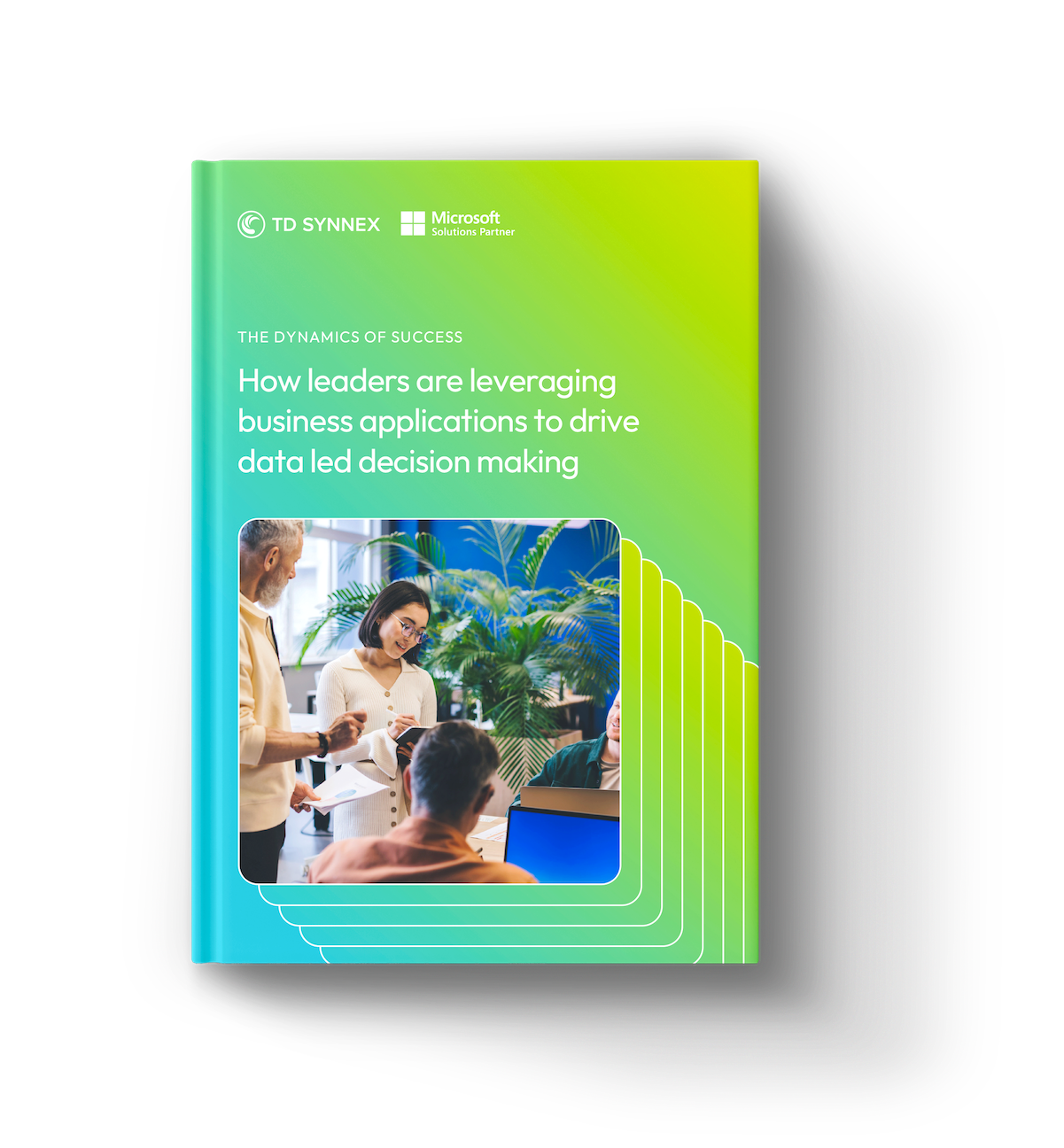
The Dynamics of Success

Get a better understanding of the benefits of connected business systems - allowing businesses like yours to overcome fragmented systems and disconnected workflows. Don't just read about them either, our report provides you with actionable insights and practical recommendations so that you can begin to make data-led decisions.

Download report
The Dynamics of Success report cover
FAQ

Frequently asked questions

Enterprise resource planning (ERP) software brings finance, purchasing, stock, projects, sales and reporting into one system, so every team works from the same data instead of separate spreadsheets and tools.

Not always. A flexible ERP such as Microsoft Dynamics 365 Business Central can be configured around sector processes, with add-on extensions for specialist needs. Each industry guide on this page covers what matters most in that sector.

Common signs include month-end taking longer each time, stock and finance figures that never match, manual re-keying between systems and reports that rely on exported spreadsheets.

No. Cloud ERP is licensed per user, so smaller and growing businesses can start with core finance and operations and add more capability as they grow.

For most small and mid-sized organisations we recommend Microsoft Dynamics 365 Business Central, which connects with Outlook, Teams, Excel and Dynamics 365 CRM.

It depends on scope, data migration and integrations. A focused first phase covering finance is usually much quicker than a full multi-department roll-out.

No. They are anonymised, illustrative scenarios based on typical challenges in each sector, not named case studies.

Enquiry form

Not sure which ERP is right for your business?

Tell us how your team works today and we will talk through what an ERP would change, which capabilities matter most in your sector and where to start. No obligation, just a straight conversation.

TD SYNNEX and its elite Dynamics partner network need the contact information you provide to us to contact you about our products and services. You may unsubscribe from these communications at any time. For information on how to unsubscribe, as well as our privacy practices and commitment to protecting your privacy, please review our Privacy Policy.